Beyond a reasonable doubt
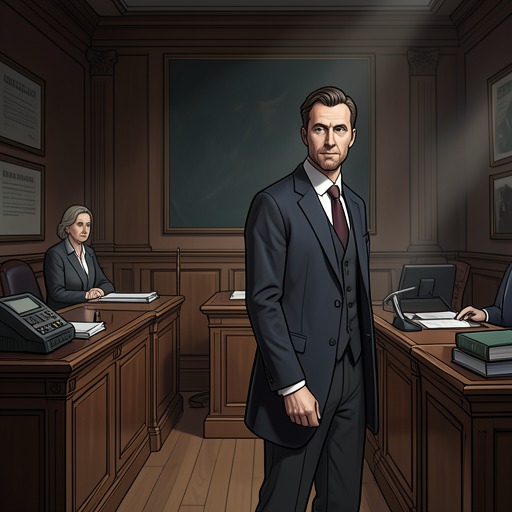
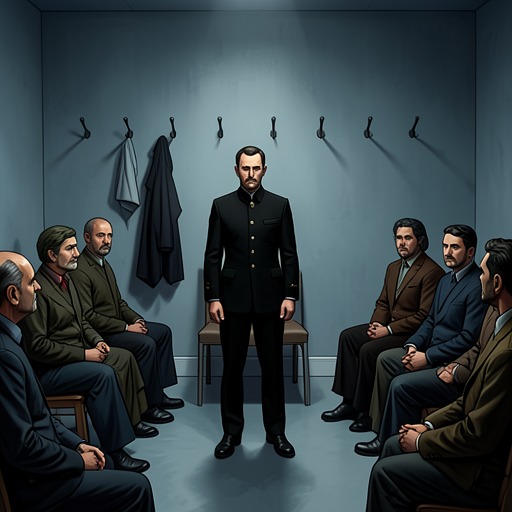
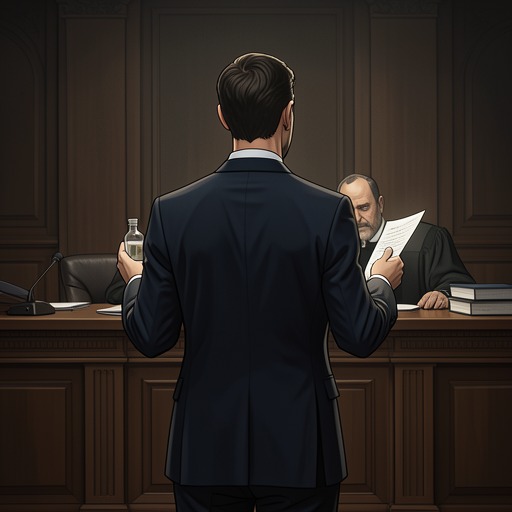
Defending JacobBeyond a reasonable doubt is the standard of proof that Neal Logiudice invokes to promise the jury a conclusive account of Ben Rifkin’s killing and a guilty verdict against Jacob Barber. The book places that legal language inside a contest of stories: Logiudice presents a coherent narrative of motive, preparation, and concealment, while the narration exposes gaps and unresolved interpretations that make certainty itself part of the case.
The prosecution’s promised case
In his opening statement, Logiudice begins with the circumstances of Ben’s death: a fourteen-year-old boy found in Cold Spring Park, near the school he had been walking toward and the home he had left minutes earlier. From that scene he shifts to Jacob, describing him as a privileged boy with a lethal temper who was pushed by ordinary teasing until he “snapped.” The account gives the crime a simple causal shape, in which a familiar school conflict becomes the trigger for murder.
Logiudice tells the jurors to understand the case as a story, not merely a collection of facts. His recurring theme is that Jacob’s alleged temper turned provocation into violence, while the acts that followed showed preparation and concealment. The device supplies a ready answer to the question of what the case is about; it also risks making the story seem settled before the evidence promised to support it has been heard.
The promised evidence includes a plan, which Logiudice says is detailed in a description of the murder written by Jacob, and a fingerprint on Ben’s body in Ben’s blood. He calls the case overwhelming and pledges that, after hearing the evidence, jurors will know beyond a reasonable doubt that Jacob is guilty. His appeal to the standard culminates in an insistence that the jury’s task is to say what is true, even though judging a child is emotionally difficult.
The gap between story and proof
The opening statement’s central vulnerability is the question of motive. Logiudice acknowledges that the reason for the killing may never be known, then offers possibilities: perhaps Ben insulted Jacob, called him names, pushed him, or bullied him. The narrator identifies this as a gaping hole in the prosecution’s account. Because jurors want to understand why a crime occurred, the absence of a settled motive matters to the story Logiudice is trying to make persuasive, even though the narrator notes that motive is not legally an element of every case.
The book also puts the prosecution’s confidence alongside the narrator’s doubts about how evidence acquires meaning. During interviews at McCormick School, Andrew Barber and Paul Duffy find that many students deny knowing Ben, despite their knowledge that he had friends. Some teenagers appear evasive when telling the truth and emphatically direct when lying; their manner is not a dependable guide to what they know. The episode complicates any easy equation between demeanor and credibility.
Later, Andrew becomes convinced that Leonard Patz is the killer and follows him for weeks, but he recognizes that Matt Magrath’s information would not persuade a jury and finds no harder evidence through surveillance. His certainty does not grow out of a discovery that resolves the case; ordinary details of Patz’s life fail to dislodge it. This parallel underscores a distinction the novel keeps in view: conviction, whether held by a prosecutor or a father, is not itself proof beyond a reasonable doubt.
Verdicts beyond the courtroom
The prosecution’s language reaches beyond the courtroom. On the morning of Jacob’s arraignment, a newspaper headline announces that the district attorney’s teenage son has been charged, while a tabloid labels him a monster. The publicity supplies a public verdict before the trial has tested the competing accounts. A reporter later tries to provoke Jacob as the family leaves court; he gives no response, but the family finds the words MURDERER and WE HATE YOU written on their home.
After the case ends, legal uncertainty does not restore Jacob’s place in the community. Andrew observes that neighbors have reached an intermediate judgment: not guilty, but not entirely innocent in their eyes. Some remain troubled by Jacob’s knife, violent fantasies, and family history; others see the abrupt end of the trial as suspicious. The family keeps Jacob out of Newton schools and resumes homeschooling, while Jacob accepts a solitary life and shows the same composure Andrew finds both admirable and potentially unsettling.
The contrast gives the standard its lasting significance in the book. A legal verdict is meant to distinguish what the evidence proves from what suspicion suggests, but the community continues to issue judgments that fall between acquittal and trust. The prosecution’s promised certainty, Andrew’s certainty about Patz, and the neighbors’ lingering doubts all demonstrate that conviction can outlast proof—and that a verdict, even when legally decisive, cannot by itself settle every social or personal question.